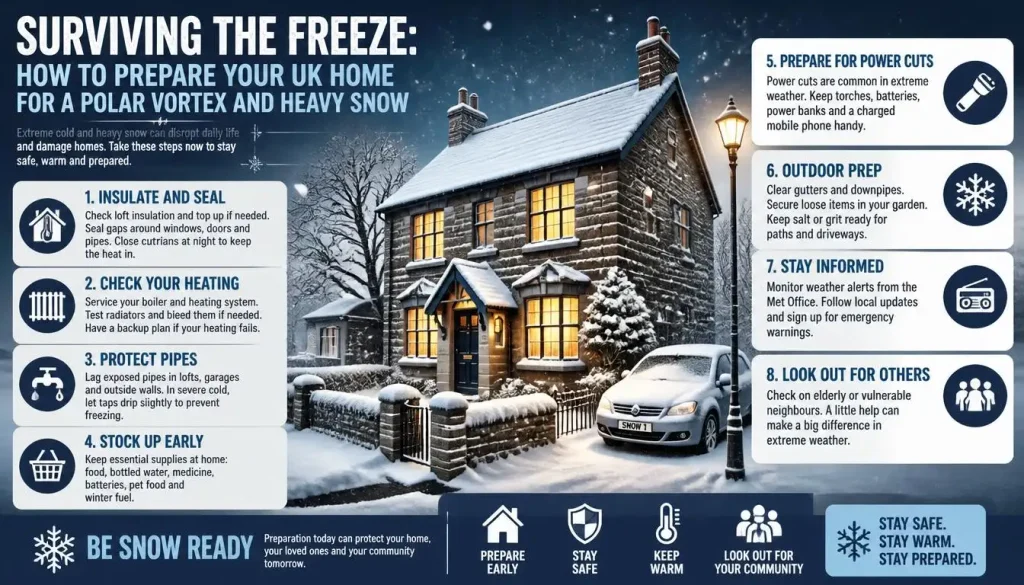




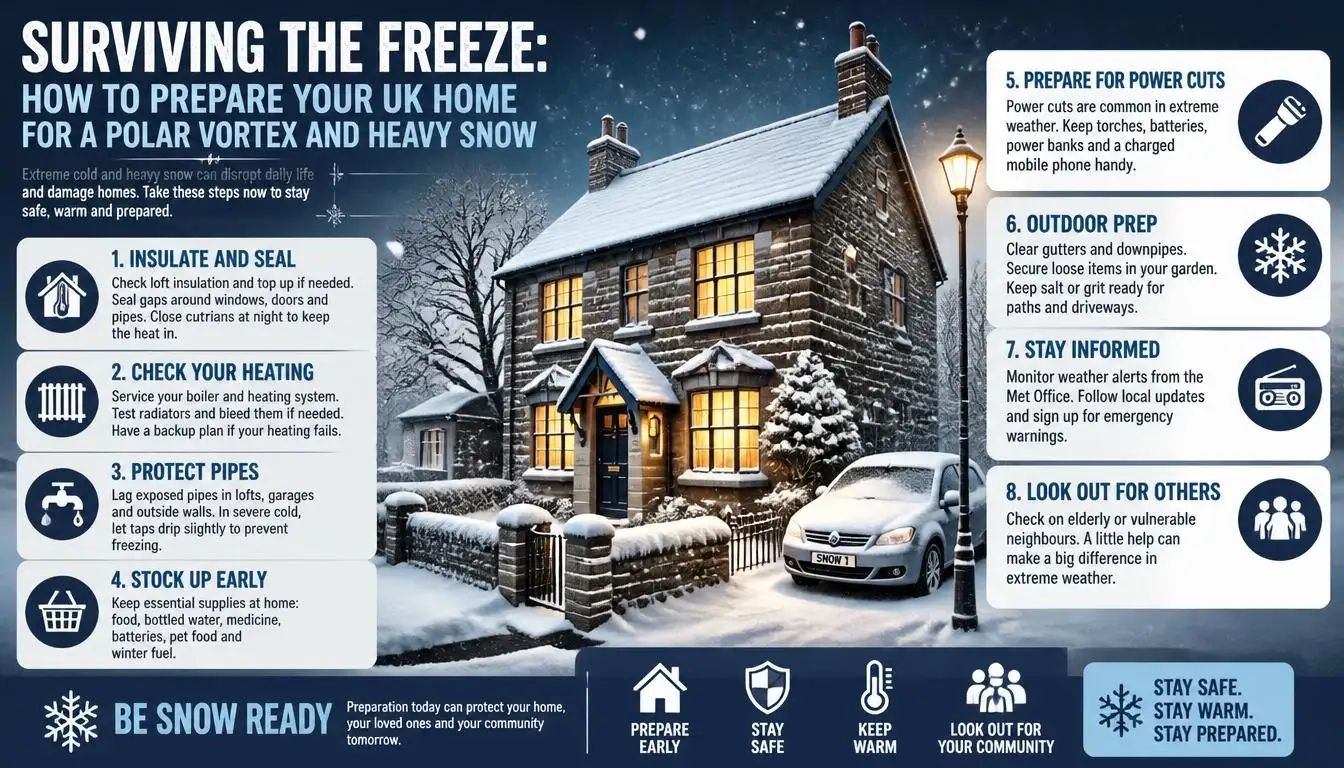
Surviving the Freeze: How to Prepare Your UK Home for a Polar Vortex and Heavy Snow
When the Met Office issues alerts regarding a disrupted Stratospheric Polar Vortex (SPV) and potential Sudden Stratospheric Warming (SSW), it signals a significant shift in winter weather dynamics. A collapsed or split polar vortex weakens the usual North Atlantic jet stream, allowing freezing Arctic air masses to plunge southwards across Britain.
The UK’s maritime infrastructure and housing stock—notoriously built for damp, mild weather rather than prolonged sub-zero temperatures—can struggle during prolonged freezes. Severe winter snaps, such as the famous “Beast from the East,” bring heavy snowfall, sub-zero wind chills, frozen pipes, power disruptions, and widespread travel gridlock.
Preparing early is essential. This comprehensive UK winter survival guide outlines how to safeguard your home, vehicle, and family against polar vortex weather.
1. Winter-Proofing Your Property
Preventing property damage during a deep freeze requires protecting your home’s plumbing and insulation before temperatures drop below freezing.
Protect Your Pipes (Prevent Bursts)
Frozen and burst pipes are among the most expensive cold-weather disasters for UK homeowners.
- Insulate Exposed Pipes: Wrap copper and plastic pipes in unheated spaces—such as lofts, basements, and garages—with foam pipe lagging.
- Disconnect Hosepipes: Drain and disconnect outdoor garden hoses, and turn off internal isolation valves serving exterior taps.
- Open the Loft Hatch: On freezing nights, open your loft trapdoor slightly to allow warm air from the living space to circulate around loft tanks and pipes.
- Locate the Main Stopcock: Ensure everyone in the house knows where the main water shut-off valve (stopcock) is located and that it turns smoothly.
Boiler Maintenance and Radiator Care
- Servicing: Have your boiler serviced annually by a Gas Safe registered engineer to prevent mid-winter breakdowns.
- Condensate Pipe Insulation: The external condensate pipe on modern condensing boilers frequently freezes during polar snaps, causing the boiler to shut down automatically. Insulate this exterior plastic pipe with waterproof lagging. If it freezes, gently pour warm (never boiling) water over it to thaw the blockage.
- Bleed Radiators: Release trapped air pockets from your radiators to maximize heating efficiency.
2. Emergency Home Supplies Checklist
Power outages and impassable roads mean you should be prepared to shelter in place comfortably for 72 hours without external assistance.
+-----------------------------------------------------------------------+
|                       72-HOUR EMERGENCY KIT CHECKLIST                 |
+-----------------------------------------------------------------------+
|  NON-PERISHABLE FOOD  | Canned stews, soups, pasta, protein bars,     |
|                       | dried fruits, pet food, and a manual opener.  |
+-----------------------------------------------------------------------+
|  DRINKING WATER       | Minimum 2 litres of bottled water per person  |
|                       | per day.                                      |
+-----------------------------------------------------------------------+
|  LIGHTING & POWER     | High-lumen LED torches, spare batteries, and  |
|                       | fully charged 20,000mAh+ power banks.         |
+-----------------------------------------------------------------------+
|  WARMTH & BEDDING     | Thermal blankets, hot water bottles, thick    |
|                       | fleece layers, and sub-zero sleeping bags.    |
+-----------------------------------------------------------------------+
|  FIRST AID & MEDS     | Essential prescription medications (2 weeks), |
|                       | pain relievers, bandages, and antiseptic.     |
+-----------------------------------------------------------------------+
|  ALTERNATIVE HEAT     | Portable indoor-safe gas heater or wood log   |
|                       | supply (with a working Carbon Monoxide alarm).|
+-----------------------------------------------------------------------+
3. Preparing Outdoor Spaces and Pathways
High winds and heavy snow accumulation can transform back gardens and driveways into hazardous zones.
- Clear Debris from Guttering: Clear fallen autumn leaves and moss from gutters and downpipes. Blocked drainage can freeze, creating heavy ice dams that pull gutters away from roof fascias and cause water ingress inside walls.
- Stock Up on Rock Salt and Sand: Local councils prioritize main A-roads and public transport routes; residential side streets and pavements often go untreated. Store a 20kg bag of rock salt or coarse sand to grit your driveway, doorstep, and footpaths. (Note: Avoid using boiling water to clear ice on steps, as it refreezes quickly into smooth black ice).
- Trim Overhanging Tree Branches: Heavy, wet snow adds significant weight to trees. Pruning weak or dead branches near your roof, greenhouse, or parked vehicles prevents structural damage during blizzards.
4. Vehicle & Road Safety Essentials
Driving in snow and ice requires proper vehicle preparation and altered driving habits.
Vehicle Winter Maintenance
- Screenwash & Coolant: Refill your washer fluid reservoir with an anti-freeze screenwash rated to at least -15°C. Check that engine coolant/antifreeze levels are adequate.
- Battery Check: Car batteries work significantly harder in freezing weather. If your battery is over four years old, have it tested or replaced.
- Tyres: Check that your tyre tread depth is well above the legal limit of 1.6mm (a minimum of 3mm is recommended for winter driving). Consider fitting winter tyres or keeping snow socks/chains in your boot if you live in rural or hilly areas.
Car Winter Breakdown Kit
Keep a dedicated winter survival pack inside your boot throughout the season:
- Extendable snow shovel and ice scraper
- High-visibility jacket and sturdy waterproof boots
- Thermal blanket or heavy winter coat
- Tow rope and jump leads
- Wind-up torch and phone charger cord
- Flask of hot drink and high-energy snacks
5. Staying Informed and Supporting the Community
During extreme winter weather events, official communication channels provide essential updates on warnings, school closures, and transport disruptions.
- Monitor Weather Alerts: Track severe weather updates via the Met Office mobile app or website, paying close attention to Yellow, Amber, and Red warnings for snow and ice.
- Register for the Priority Services Register (PSR): If you are elderly, disabled, have young children, or rely on medical equipment, sign up for your energy network provider’s free Priority Services Register to receive extra support during power cuts.
- Check on Vulnerable Neighbours: Extremely low temperatures can pose severe health risks to older individuals and vulnerable neighbours. A quick check to confirm their heating is working and that they have sufficient food supplies can be lifesaving.
Taking proactive steps before severe cold arrives ensures your home stays warm, your family remains safe, and your property is protected when a polar vortex hits.