



Artificial Intelligence in Everyday Life: How AI Tools Like ChatGPT and Gemini Are Shaping Our Future
Looking at global search engine metrics and trending topics worldwide, Artificial Intelligence (AI)—specifically generative AI platforms like ChatGPT and Google Gemini—remains one of the most consistently searched technology topics. What started as an experimental novelty in tech labs has rapidly evolved into an indispensable assistant integrated into work, education, creative industries, and daily living.
1. The Rise of Generative AI
Artificial Intelligence refers to computer systems engineered to perform complex tasks that historically required human intelligence, such as reasoning, learning from context, decision-making, and creative problem-solving.
The surge in generative AI tools over recent years marks a major shift. Instead of relying solely on traditional search engines to parse links, millions of users now use AI models to summarize extensive documents, generate creative code, draft professional communication, and translate complex concepts into clear explanations within seconds.
2. Practical AI Applications in Daily Workflows
AI tools have shifted from futuristic concepts to everyday utility across multiple domains:
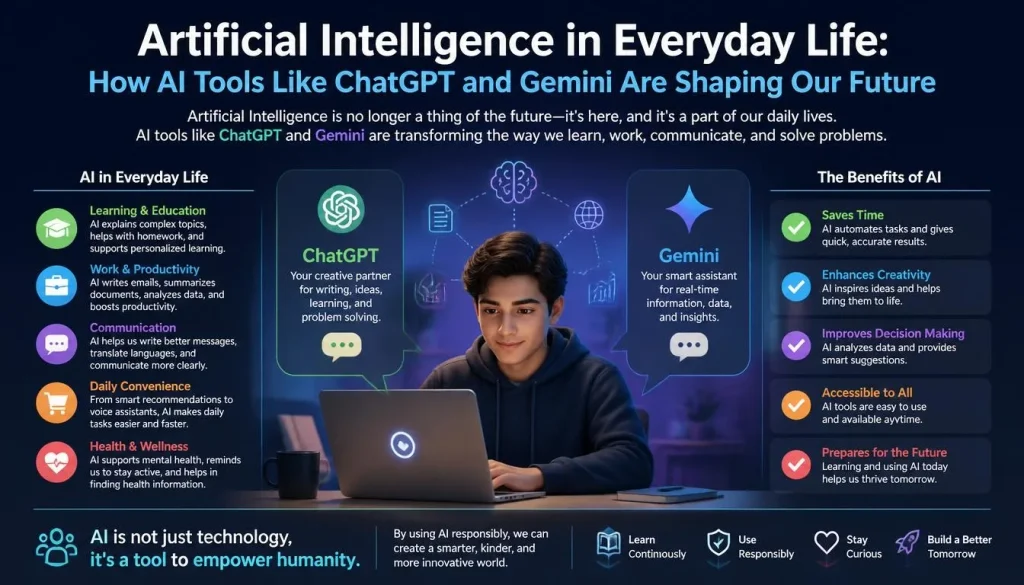
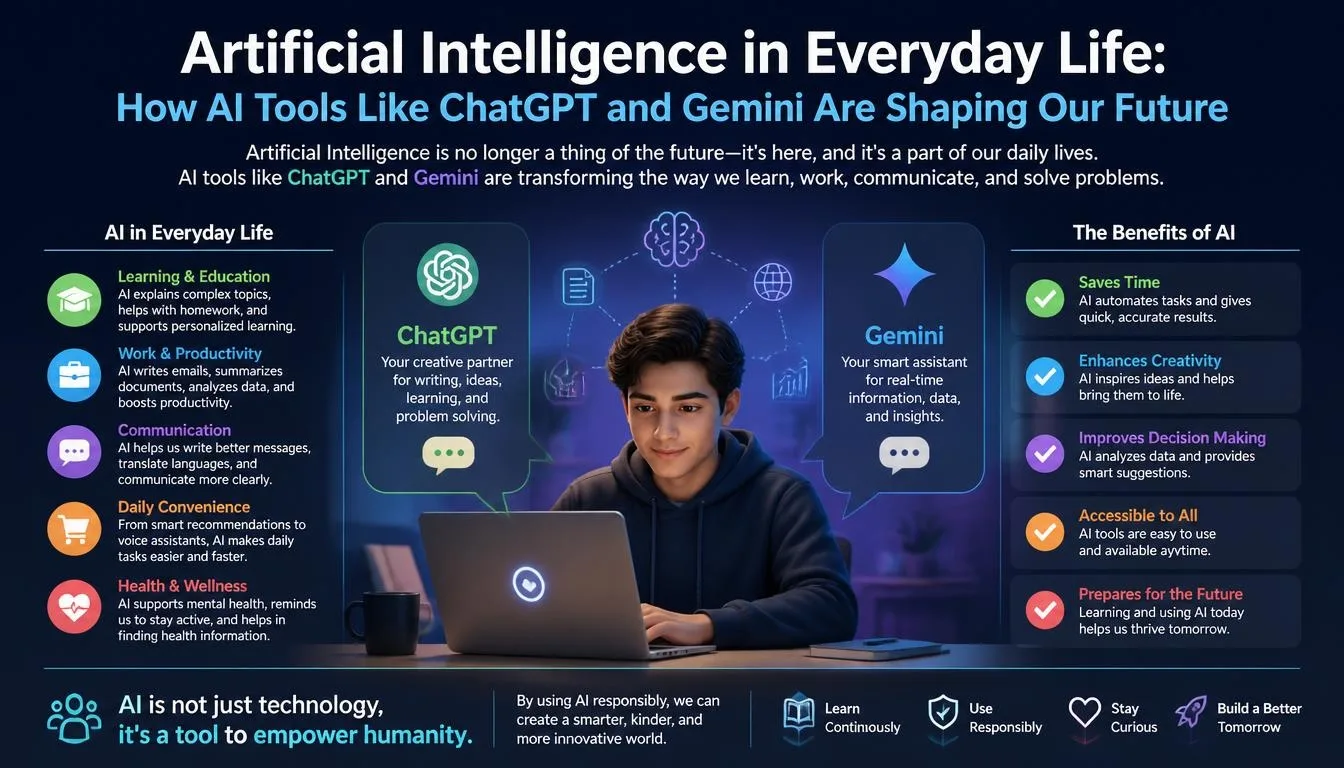
- Education & Skill Acquisition: Students and researchers leverage conversational AI as personalized tutors to break down complex subjects, practice foreign languages, or debug programming scripts.
- Content Creation & Marketing: Marketers and creators use generative AI to brainstorm campaign strategies, outline blog frameworks, write copy, and produce visual assets efficiently.
- Personal Productivity: From organizing complex schedules and drafting emails to analyzing data sets, AI operates as an on-demand personal digital assistant.
3. Key Challenges and the Evolving Job Market
While the benefits of AI adoption are substantial, the rapid pace of development introduces important considerations:
- Changing Workforce Requirements: Repetitive administrative tasks and basic data entry workflows are increasingly automated, shifting demand toward technical management and strategic oversight.
- The Value of AI Literacy: Professionals skilled in prompt engineering, AI integration, and workflow optimization are experiencing significant career growth across various industries.
- Data Accuracy and Verification: AI-generated outputs require human review and fact-checking to ensure factual accuracy and avoid biased interpretations.
4. Looking Ahead: The Future Outlook
The integration of artificial intelligence is not about replacing human creativity; rather, it amplifies human efficiency and innovation. As AI tools continue to improve in speed, accuracy, and multimodal capabilities (processing text, voice, images, and video simultaneously), adaptability and digital literacy remain key to thriving in the modern digital economy.